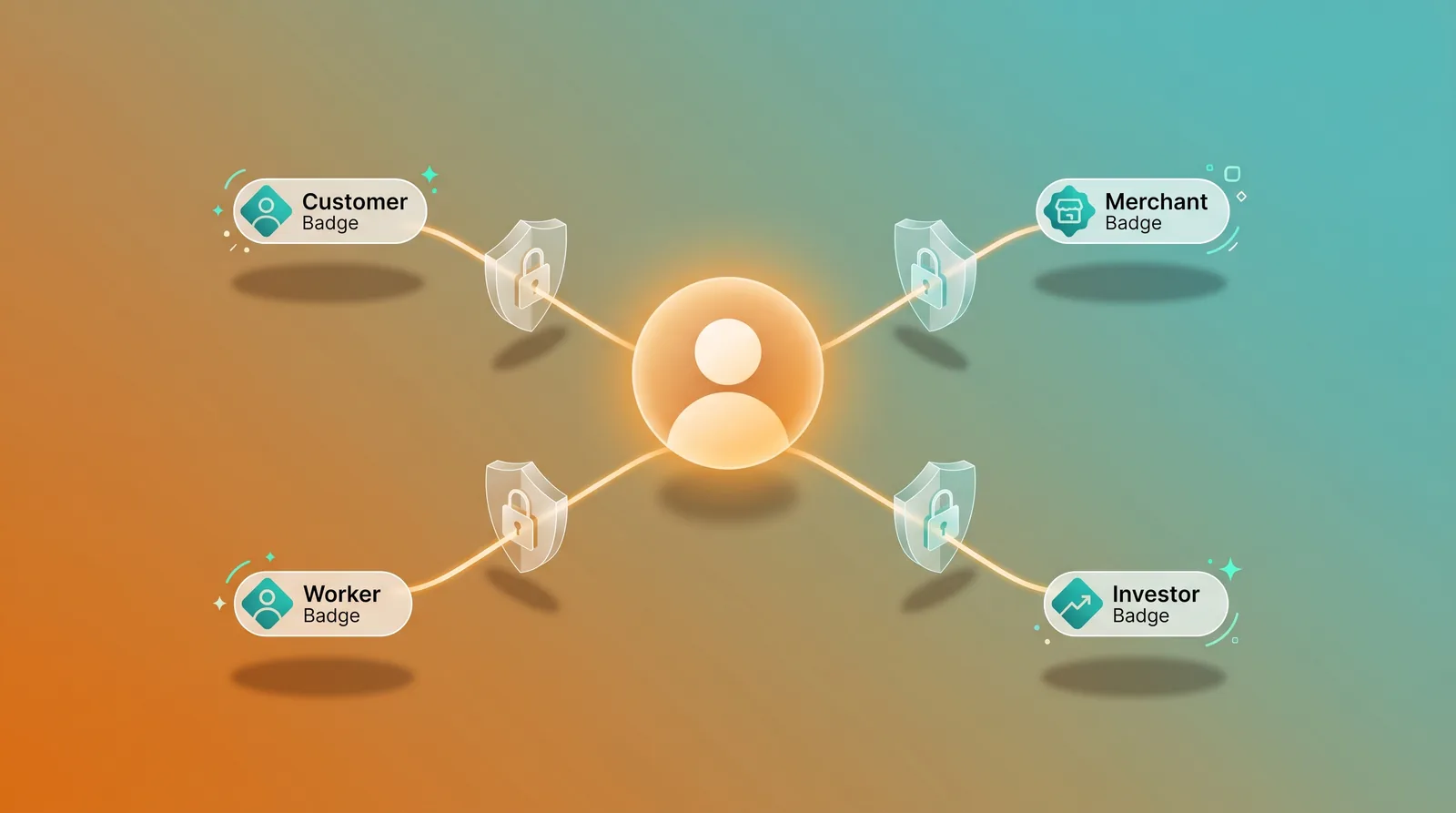
A single person on Kadaikodi might wear several hats: a customer who orders lunch, a merchant who runs a store, an investor who backs other merchants. The platform has to let identity flex across all of them without losing control.
Kadaikodi runs as a governed, multi-role marketplace. One identity can hold many roles, but every action is scoped by role, every field is protected by the platform’s RBAC, and every change is attributable. Crucially, Kadaikodi doesn’t reinvent any of this — identity and authorization are inherited from the Burdenoff platform.
That’s how a marketplace stays secure and auditable even as people move fluidly between roles.
Illustrative scenario — describing the identity and access model the platform is built on.
Illustrative workflow outline
One Kadaikodi identity, many hats — move between the customer, merchant, worker, and investor surfaces (plus admin, for operators), each one role-aware and governed by the platform’s RBAC.
This outline is not proof that a workflow completed. Actual availability and outcomes depend on your role, workspace configuration, and the service at the time you use it.
Open the Kadaikodi home. The launch pad reads your account role and shows quick actions and stats tailored to it.
You should see: Your home adapts to who you are — a customer sees ordering shortcuts, an owner sees their store, and so on.
Ready to make this your story?