
What is Kadaikodi and who is it for?
Kadaikodi is a headless cart, checkout, catalog, order, and merchant control plane designed to manage the entire selling surface of modern commerce.
About this answer — Produced by our own assistant on 23 September 2026 from our published documentation. The pages it drew on are linked under the answer. It is generated text, not a statement from a person — where it and a linked page disagree, the page is right.
Answer
Kadaikodi[1] is a headless cart, checkout, catalog, order, and merchant control plane designed to manage the entire selling surface of modern commerce. Instead of stitching together fragmented tools for carts, catalogs, order tracking, and dispatch, Kadaikodi unites them into an API-first, workspace-native backend and back-office platform. It manages physical products and bookable services under a unified offering model with server-computed pricing, multi-stage order lifecycles, field fulfillment dispatch, and marketplace financing.
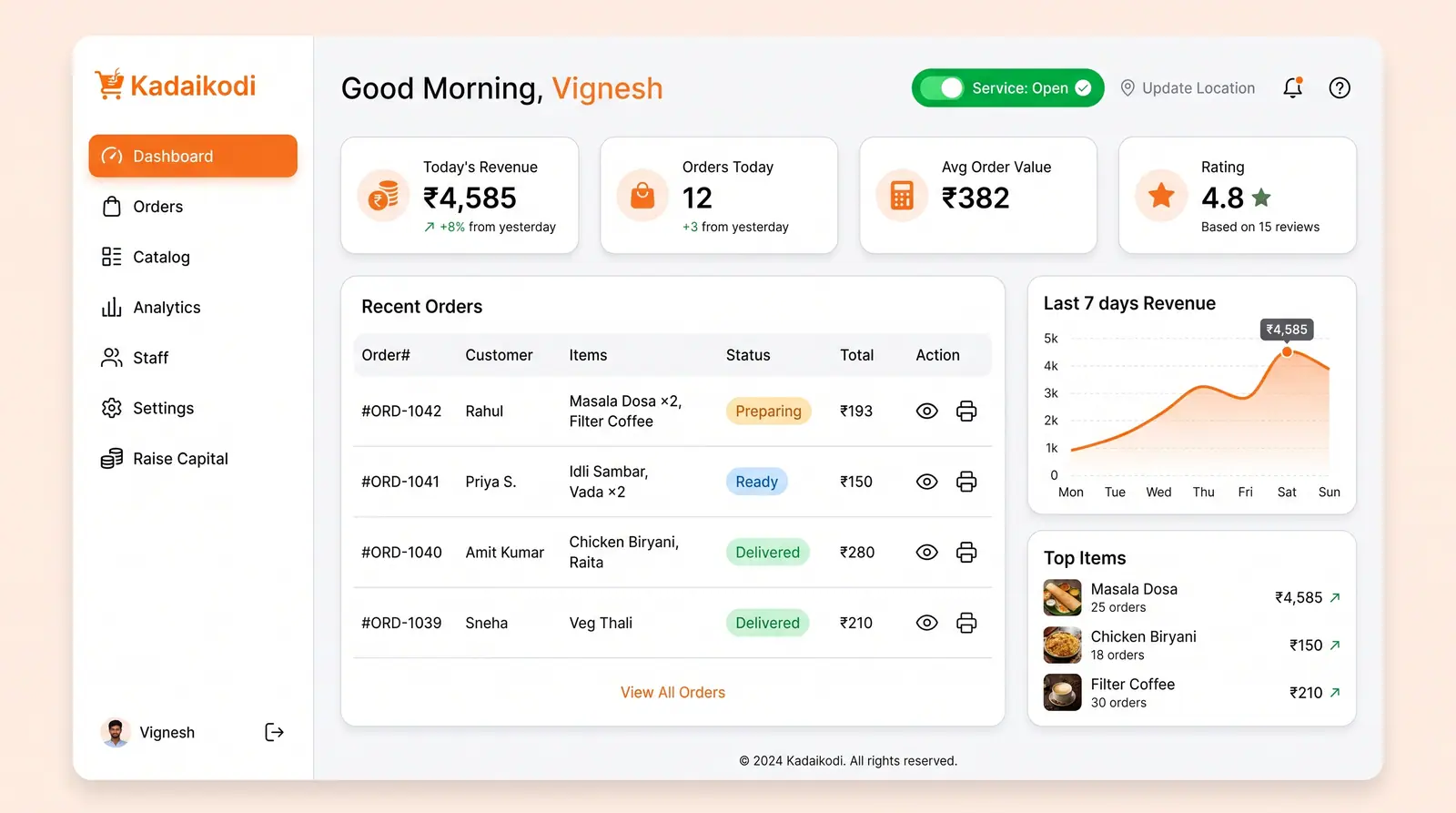
Merchants and operators manage their store settings, fulfillment states, and daily metrics through the Merchant Dashboard and Order Lifecycle[2].
 (opens in a new tab)
Illustration of the concept, not a screenshot of the actual product — Merchant Dashboard and Order Lifecycle[2]
(opens in a new tab)
Illustration of the concept, not a screenshot of the actual product — Merchant Dashboard and Order Lifecycle[2]
Kadaikodi is built for several key audiences across its use cases[3]:
- D2C & B2C Brands: Teams wanting a durable, headless cart and checkout engine under custom storefronts, mobile apps, or kiosks without rebuilding commerce plumbing.
- Marketplace Operators: Platforms hosting multiple vendors that need self-service merchant onboarding, verification, branding, and centralized analytics.
- Hybrid & Local Service Providers: Sellers offering physical goods alongside bookable services (such as food, retail, repairs, salon appointments, and home services) within a single catalog and checkout flow.
- Fulfillment & Field Operations Teams: Dispatchers and field workers coordinating pickups, deliveries, on-location tasks, and home service jobs against live orders.
- Commerce Engineers & Platform Teams: Developers looking for a GraphQL-native backend with built-in role-based access control, SDKs, and multi-tenant isolation.
- Merchant Financiers & Backers: Investors and marketplace operators providing transparent, auditable growth capital to platform merchants.
To explore how the platform fits your commerce setup, review the full range of Kadaikodi features[4] or contact the team[5] to schedule a demo.
Sources
The pages this answer was drawn from.
- Headless Cart & Commerce Management Platform | Kadaikodikadaikodi.com(opens in a new tab)
- Merchant Dashboard and Order Lifecycle — Concept | Kadaikodikadaikodi.com(opens in a new tab)
- Use Cases — Cart, Catalog, Orders & Marketplaces | Kadaikodikadaikodi.com(opens in a new tab)
- Features — Headless Cart & Commerce Platform | Kadaikodikadaikodi.com(opens in a new tab)
- Contact Us - Kadaikodikadaikodi.com(opens in a new tab)
More in Product
I want to sell — how do I get my shop verified and live on Kadaikodi?
To start selling on Kadaikodi, you follow a structured onboarding and verification path to get your storefront ready and discoverable
3 sourcesCan I sell products and take service bookings from the same catalog?
Yes. Kadaikodi natively supports a unified catalog model, allowing you to list physical products and bookable services side by side under a single storefront, cart, and…
5 sources